 The Largest Number of Homes for Sale
10 trendy and timeless interior design styles
Are you the type of person who spends hours collecting ideas for your next renovation project? Or maybe you’ve just bought or rented a property and don’t know where to start when it comes to decorating your space? Scandinavian, maximalist, modern, rustic, or even cottagecore: there are so many interior design styles out there, and it can be hard to figure them all out. To help you see things more clearly, discover the decor styles that are trending right now, as well as the timeless classics that have stood the test of time without losing their charm. Explore their key features and find inspiration to create a space that reflects your personality.

|
At a glance
|
The cottagecore style: country charm
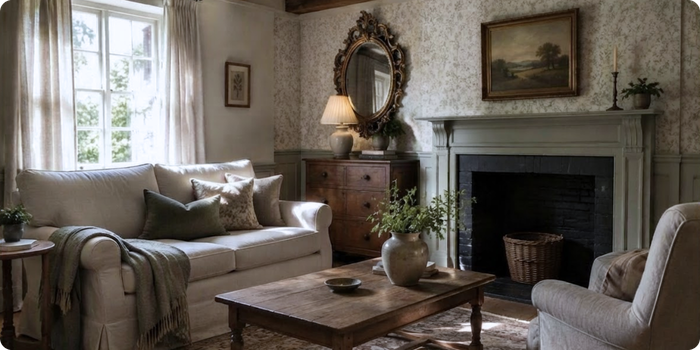
Although it gained popularity on social media in the 2010s, cottagecore draws on a much older tradition. It embraces certain values of the Arts and Crafts movement. According to the Victoria and Albert Museum in London, this movement originated in Great Britain in the late 19th century and emphasized, among other things, artisanal craftsmanship, simplicity, and the natural qualities of materials. Today, cottagecore translates these influences into a romantic aesthetic that evokes an idealized version of country life.
- Materials: weathered wood, linen, cotton, ceramics, and rattan.
- Colours: cream, off-white, sage green, and pastel shades.
- Patterns: flowers, foliage, checks, and delicate stripes.
- Furniture: vintage pieces, flea market finds, and antique cabinets.
- Accessories: mismatched tableware, woven baskets, flower bouquets, and handmade items.
- Atmosphere: rustic, romantic, warm, and nostalgic.
 |
Tips and tricks
To embrace the cottagecore style without overwhelming your space, add a few floral textiles, handmade accessories, and one or two vintage pieces to a decor scheme featuring soft colours. |
The Japandi style: the art of balance
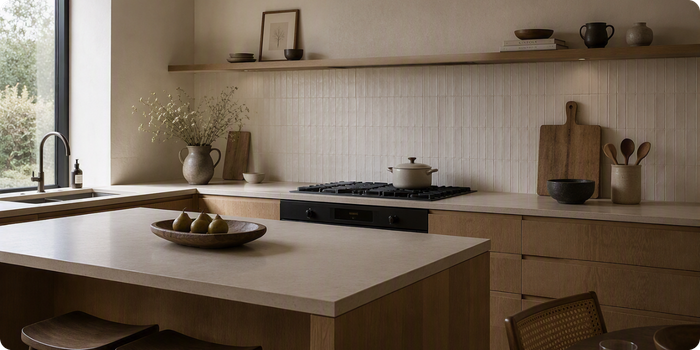
A portmanteau of the words “Japanese” and “Scandinavian,” Japandi blends the understated elegance of Japanese interiors with the functional simplicity of Nordic design. While the name is relatively recent, the convergence of these two worlds is nothing new. The Designmuseum Danmark notes that Japanese art and craftsmanship have influenced Danish design since the late 19th century, particularly in the choice of materials, furniture, and the prominence given to nature. Japandi also draws inspiration from wabi-sabi, a Japanese aesthetic that recognizes the beauty of simplicity, imperfection, and the traces left by time, as explained by Japan House London. The result is a minimalist decor that is warm rather than cold, where natural materials, simple forms, and carefully selected objects create a harmonious atmosphere.
- Materials: natural wood, stone, bamboo, paper, linen, and ceramics.
- Colours: off-white, beige, taupe, brown, warm gray, and black in small accents.
- Patterns: few, subtle, and generally inspired by organic shapes.
- Furniture: low-profile pieces, simple lines, rounded shapes, and functional items.
- Accessories: handmade ceramics, paper lamps, dried branches, and carefully selected objects.
- Atmosphere: calm, harmonious, warm, and minimalist.
|
Tips and tricks
To embrace the Japandi style, declutter the space and focus on a few useful or meaningful items. Combine woods of different shades, natural textiles, and organic shapes to create a simple yet inviting interior. |
The maximalist style: when abundance becomes an art form
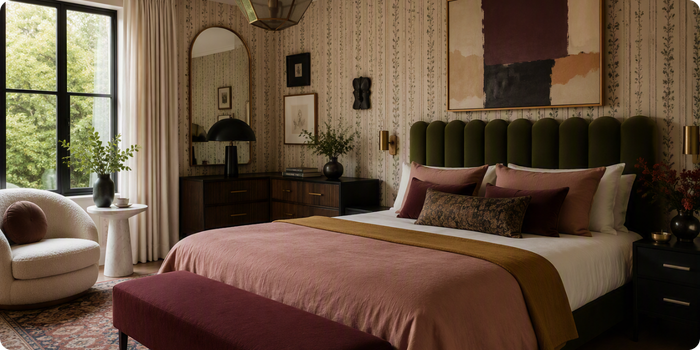
In contrast to simple, minimalist decor, the maximalist style celebrates abundance, colour, and personal expression. It relies on a thoughtful layering of patterns, textures, artwork, and decorative objects to create a vibrant interior that tells a story. Although it is a contemporary aesthetic, its penchant for lavish and theatrical decor echoes Baroque art. Originating in Italy in the late 16th century, this movement sought to surprise and evoke emotion through imposing works, elaborate forms, and dramatic compositions, as explained by the Grand Palais, a Parisian museum. Today’s maximalism, however, aims to be more personal and eclectic: it freely brings together colours, influences, and objects that reflect the occupants’ personalities.
- Materials: velvet, brass, dark wood, ceramics, coloured glass, and a variety of textiles.
- Colours: saturated hues, contrasting colours, and luxurious tones such as sapphire blue, emerald green, and ruby red.
- Patterns: flowers, geometric shapes, animal prints, stripes, and graphic patterns.
- Furniture: eclectic pieces, vintage items, sculptural forms, and objects from different eras.
- Accessories: artwork, books, travel souvenirs, colourful throw pillows, patterned rugs, and personal collections.
- Atmosphere: expressive, eclectic, theatrical, and warm.
|
Tips and tricks
To embrace maximalism without creating a cluttered look, choose a unifying theme, such as a colour palette, a recurring pattern, or a dominant material. The goal isn’t to accumulate as many objects as possible, but to create a rich, cohesive, and personal decor. |
Quiet luxury: elegance through subtlety
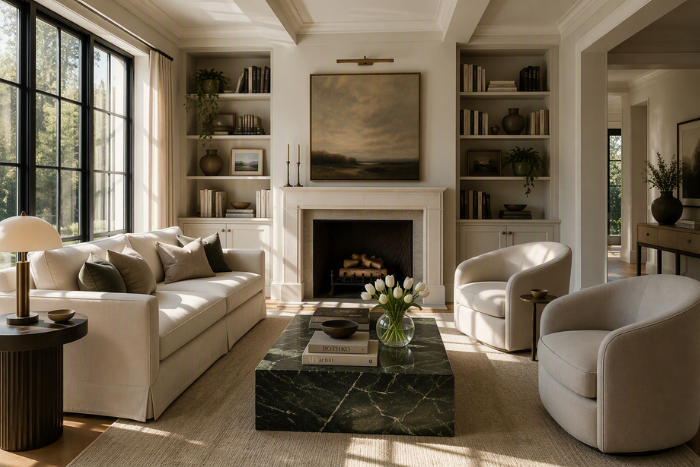
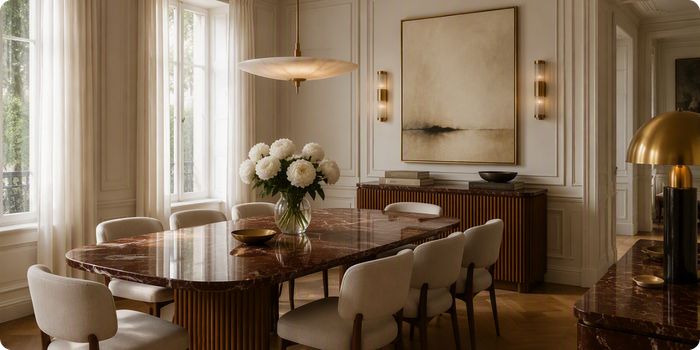
This style offers an understated and refined approach to interior design. Rather than relying on flashy elements or visible brand names, it emphasizes the quality of materials, the finesse of details, and artisanal craftsmanship. This contemporary trend is rooted in a more traditional conception of luxury. The Musée des Arts Décoratifs in Paris notes that luxury has long been associated with beauty, rare materials, high-quality craftsmanship, and the transmission of specialized techniques. In an interior, quiet luxury is expressed through clean lines, rich textures, and a soothing colour palette. The result is a timeless and carefully composed decor, whose elegance is evident in the details rather than in ostentation.
- Materials: solid wood, natural stone, marble, linen, wool, leather, and brushed metal.
- Colours: cream, ivory, beige, taupe, warm gray, brown, and black in small accents.
- Patterns: subtle, tone-on-tone, or absent to highlight the materials.
- Furniture: pieces with clean lines, balanced proportions, and meticulous finishes.
- Accessories: sculptural lighting fixtures, works of art, high-quality textiles, and handcrafted objects.
- Atmosphere: elegant, calm, cozy, and sophisticated.
|
Tips and tricks
To embrace quiet luxury without breaking the bank, focus on quality rather than quantity. Choose a few timeless pieces, play with different textures within the same colour palette, and avoid overcrowding the room. A beautiful lamp, well-fitted curtains, or a wooden table can be all it takes to create a sense of sophistication. |
The biophilic style: when nature comes indoors
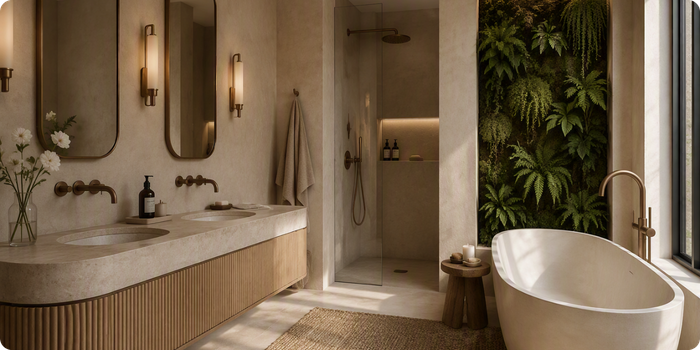
The biophilic style aims to strengthen the connection between a space’s occupants and nature. Much more than simply filling a space with plants, this approach also relies on natural light, organic materials, views of the outdoors, and forms that evoke the living world. A university study on biophilic interior design highlights, in particular, the importance of colour, light, and natural materials in creating environments inspired by nature. The result is a bright, lively, and soothing interior, where every element helps bring daily life closer to the outside world.
- Materials: wood, stone, rattan, cork, bamboo, linen, and clay.
- Colours: green, beige, brown, terracotta, blue, and other nature-inspired shades.
- Patterns: foliage, flowers, organic shapes, and irregular lines.
- Furniture: pieces made from natural materials, with curved shapes, arranged to make the most of natural light or outdoor views.
- Accessories: plants, planters, natural textiles, handcrafted items, and elements inspired by water or the landscape.
- Atmosphere: natural, bright, lively, and soothing.
|
Tips and tricks
To embrace the biophilic style, start by clearing the windows to maximize natural light and the view outside. Then add plants suited to the conditions in each room, natural materials, and a few organic shapes. Even without large windows, wooden furniture, linen textiles, and nature-inspired colours can help create this atmosphere. |
Mid-century modern style: retro charm that never goes out of style
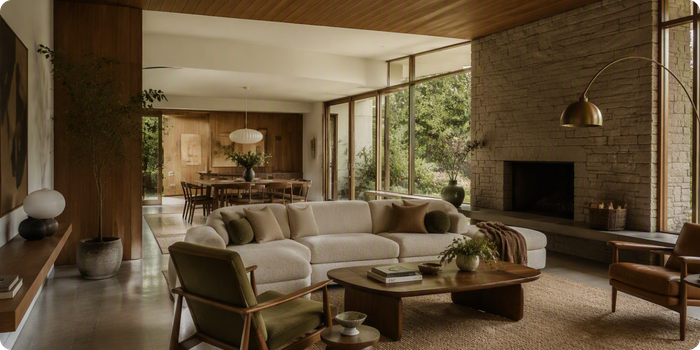
Popularized between the 1940s and 1960s, the mid-century modern style emerged from a desire to create interiors suited to a more modern lifestyle. The figures who contributed to its rise include Charles and Ray Eames, who left their mark on design history with their organically shaped furniture, using materials and manufacturing techniques that were innovative at the time, such as molded plywood, fiberglass, and plastic. According to the Museum of Modern Art, their work helped transform North American households’ relationship with design, particularly by making it more accessible. Today, the mid-century modern style is recognizable by its clean lines, rounded shapes, and furniture with tapered legs. Its retro touches add personality to the decor, while its functional approach keeps it relevant today.
- Materials: walnut, teak, veneered wood, leather, glass, metal, and molded plastic.
- Colours: brown, caramel, olive green, mustard yellow, burnt orange, and deep blue.
- Patterns: geometric shapes, graphic lines, and abstract prints.
- Furniture: tapered legs, low-profile silhouettes, organic shapes, and functional pieces.
- Accessories: sculptural lighting, graphic posters, ceramics, and vintage objects.
- Atmosphere: retro, warm, elegant, and functional.
|
Tips and tricks
There’s no need to turn your home into a 1960s-style setting. Incorporate one or two signature pieces—such as a curved armchair, a wooden sideboard, or a sculptural light fixture—and pair them with contemporary elements. This mix lets you enjoy the character of mid-century modern while maintaining a modern decor. |
The Scandinavian style: simplicity, light, and comfort
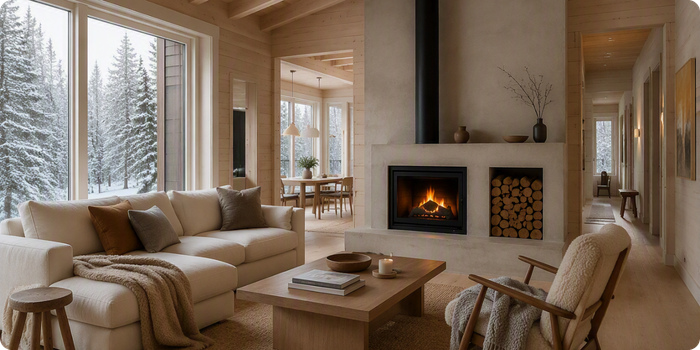
Originating in the Nordic countries and gaining international popularity in the mid-20th century, the Scandinavian style emphasizes a balance between simplicity, functionality, and comfort. It prioritizes bright spaces, clean lines, and natural materials to create an interior that is both practical and welcoming. The Designmuseum Danmark explains that modern Danish design developed as a reaction to the cluttered and heavily decorated interiors of the early 20th century, before gaining significant international influence. Today, the Scandinavian style remains timeless thanks to its understated, warm aesthetic that is easily adaptable to different types of homes.
- Materials: light wood, wool, linen, cotton, leather, and ceramics.
- Colours: white, cream, beige, pale gray, and pastel shades.
- Patterns: simple geometric shapes, stripes, and nature-inspired motifs.
- Furniture: functional pieces with clean lines, tapered legs, and slightly rounded shapes.
- Accessories: simple light fixtures, cozy textiles, candles, baskets, and handcrafted items.
- Atmosphere: bright, warm, minimalist, and inviting.
|
Tips and tricks
To embrace the Scandinavian style, start with a light colour palette and add natural wood along with some cozy textiles. Keep surfaces relatively uncluttered and choose furniture that is both attractive and functional. A few pops of colour or personal items will then help give the space character without losing the desired sense of simplicity. |
The rustic style: authenticity with a modern twist
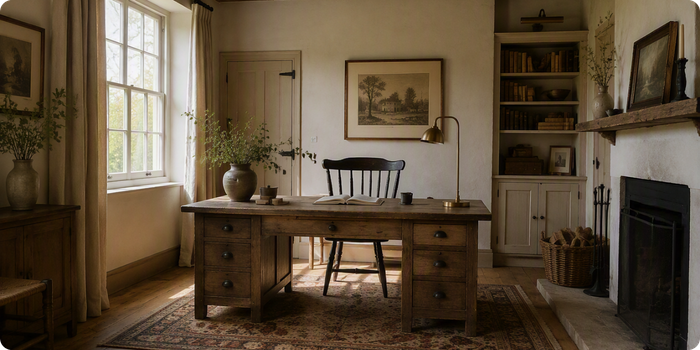
The contemporary rustic style emphasizes the warmth of natural materials while maintaining a modern look. Wood, stone, and textured fabrics blend with cleaner lines, neutral colours, and bright spaces. Unlike traditional rustic decor, this modernized version avoids an overabundance of antique objects and overly rustic elements. Instead, it focuses on a few statement pieces—such as a solid-wood table, a stone fireplace, or exposed beams—combined with understated furniture. The result is a warm, elegant interior that’s easily adaptable to both a house and a condo.
- Materials: natural wood, stone, concrete, leather, linen, and wool.
- Colours: cream, beige, greige, brown, warm gray, and olive green.
- Patterns: subtle, organic, checkered, or nature-inspired patterns.
- Furniture: simple lines, generous shapes, and a mix of contemporary and handcrafted pieces.
- Accessories: ceramics, textured textiles, minimalist lighting, and handmade objects.
- Atmosphere: warm, natural, relaxed, and modern.
|
Tips and tricks
Choose one or two rustic elements as focal points, then balance them with contemporary furniture and a neutral colour palette. This combination creates a warm decor without making it look too rustic. |
The transitional style: a balance between classic and contemporary
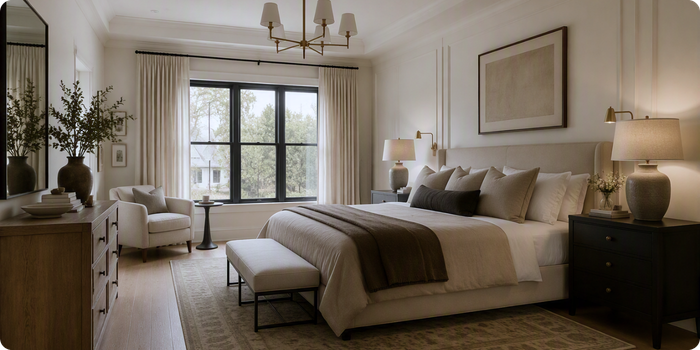
The transitional style combines the elegance and warmth of traditional decor with the clean lines of contemporary design. Classic details, such as mouldings, paneled doors, and furniture with rounded shapes, are paired with more understated pieces, modern accessories, and a neutral colour palette. The goal is to create a balanced look in which neither style dominates. Versatile and easy to personalize, the transitional style stands the test of time because it prioritizes comfort, simplicity, and pieces chosen to last.
- Materials: wood, stone, marble, glass, metal, linen, and wool.
- Colours: off-white, cream, beige, greige, taupe, and warm gray.
- Patterns: geometric or classic, subtle, and used sparingly.
- Furniture: a mix of classic silhouettes and contemporary lines.
- Accessories: modern lighting fixtures, artwork, textured rugs, and sleek decorative objects.
- Atmosphere: elegant, balanced, comfortable, and timeless.
|
Tips and tricks
Start with a neutral palette, then pair a classic element with a more contemporary piece. For example, combine decorative mouldings with a modern light fixture or a sofa with clean lines with a traditional wooden table. |
The modern farmhouse style: country charm reimagined
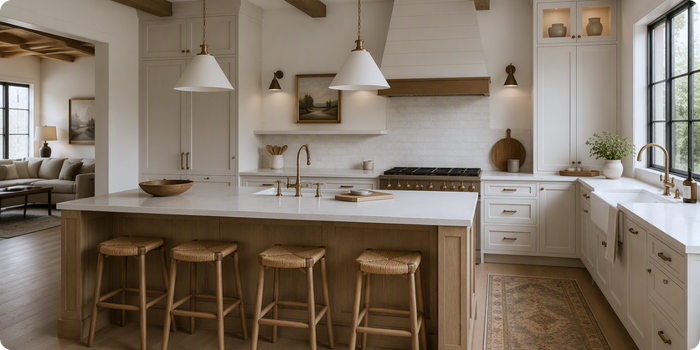
The modern farmhouse style combines the welcoming character of country homes with the simplicity of contemporary design. It incorporates certain rustic elements—such as natural wood, sturdy furniture, and textured materials—and modernizes them with clean lines, a bright colour palette, and well-balanced contrasts. Unlike the traditional rustic style, it emphasizes open spaces and a more understated decor. The result is a warm, bright, and modern interior, particularly well-suited to kitchens and open-concept living spaces.
- Materials: natural wood, stone, brick, black metal, linen, and cotton.
- Colours: off-white, cream, beige, greige, brown, and black as contrasting accents.
- Patterns: checks, thin stripes, and subtle prints.
- Furniture: large, inviting tables, cabinets with clean lines, and pieces combining wood and metal.
- Accessories: pendant lights, baskets, ceramics, natural textiles, and handcrafted items.
- Atmosphere: warm, bright, inviting, and relaxed.
|
Tips and tricks
To embrace the modern farmhouse style without falling into a themed decor trap, avoid overloading the space with farm-inspired accessories. Instead, focus on a few natural materials, a light colour palette, and black accents, which will give the overall look a more contemporary feel. |
Create a decor that reflects who you are
Choosing a home interior design style doesn’t mean you have to follow all its rules to the letter. Start by looking at the colours, materials, and moods that keep coming up in your inspiration sources. Also consider your lifestyle, the architecture of your home, and the level of maintenance you’re comfortable with. A successful decor should be as pleasing to the eye as it is practical for everyday living.
Can’t decide between several styles? Don’t be afraid to mix them. A Scandinavian interior can incorporate a few mid-century modern elements, while a transitional style can include rustic materials or touches of quiet luxury. To create a harmonious whole, maintain a unifying theme, such as a colour palette, a dominant material, or recurring shapes.
Whether it’s minimalist, colourful, natural, or inspired by the past, the best decor style is, above all, the one that makes you feel at home. After all, interior design trends can fuel inspiration, but your personality remains the best way to make your home unique.

| The images presented in this article may have been created or modified using artificial intelligence technologies. |
See also:
Kitchen and bathroom trends for 2026
Trend colours for 2026, according to Pantone and other paint brands
10 dreamy outdoor design trends for 2026