The Largest Number of Homes for Sale
Which heating system should you choose for your home?
Is your heating system nearing the end of its useful life, or are you building a new home and need to decide how to heat it? This is a decision that warrants careful consideration: according to Hydro-Québec, heating and air conditioning account for 54% of an average household’s electricity consumption. Your decision will therefore affect both your energy consumption and your comfort.
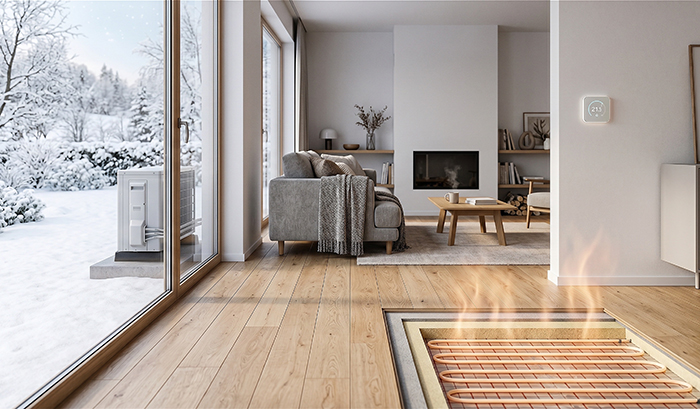
Electric baseboard heaters, convector heaters, forced-air central heating, heat pumps, radiant heating: how do you know which system is best suited for your home? This guide presents the main types of residential heating systems, along with their pros and cons. This will help you better compare your options and determine which ones align with your priorities, whether you’re renovating or building a new home.

|
At a glance
|
Why is it important to choose the right heating system?
A heating system tailored to your home can reduce your energy consumption, improve your comfort, and minimize your environmental footprint. Conversely, an aging or inefficient system can lead to higher costs and negatively impact your property's value in the eyes of future buyers.
When should you replace your heating system?
A heating system doesn’t have to be replaced as soon as it reaches a certain age, but a 15- or 20-year-old unit warrants an evaluation, especially if its efficiency is declining or repairs are becoming more frequent.
|
|
|
|
Sign |
Action to take |
|
Increased energy costs (without any noticeable change in your lifestyle or weather conditions) |
Have your system and your home’s energy efficiency evaluated. |
|
Frequent repairs |
Compare the cost of repairs to that of a replacement, considering the new unit’s efficiency. |
|
Temperature variations from room to room |
Check the system, heat distribution, and insulation: the unit isn’t always to blame. |
Before choosing a new unit, the Government of Quebec recommends assessing your heating needs and the characteristics of your home. Replacing the old system with a model of the same capacity isn’t always the best solution, especially if the house has been recently renovated or better insulated.
What factors should you consider before choosing a heating system?
Two homes with the same floor area don’t necessarily have the same needs. Before comparing systems, assess your property’s characteristics—including insulation—your budget, and your region’s climate.
Home characteristics
Floor area serves as a starting point, but it’s not enough to determine the required heating capacity. The number of stories, ceiling height, room layout, sun exposure, and the quality of insulation also matter.
Existing equipment can influence your choice. For example, a home with ventilation ducts is better suited to a central system.
Installation budget and operating costs
The purchase price is only part of the investment. Depending on the system, you’ll need to budget for installation, adapting existing equipment, adding ductwork, or electrical work.
A system that’s inexpensive to install may not be cost-effective in the long run. Energy consumption, the cost of the energy used, maintenance, repairs, and lifespan also play a role.
Ask yourself whether you’d rather limit your initial expenses or invest more for better long-term performance. The answer depends on your budget, how long you plan to live in the house, and the potential savings.
Regional climate
In regions with harsh winters, you must ensure that the system always provides sufficient heat. Some systems may require supplemental heating during the most severe conditions. Base your assessment on the system’s performance in your specific location rather than on its rated output under ideal conditions.
 |
Tips and tricks
A heating contractor or qualified professional can determine the required capacity—usually expressed in BTU/h—check compatibility with existing equipment, and compare operating costs. |
Main types of heating systems
In Quebec, there are many ways to heat a house, but the systems do not all produce or distribute heat in the same way. Some heat each room directly, while others are centralized. Here’s what you need to know about each one.
Electric baseboard heaters
Very common in Quebec homes, baseboard heaters operate by natural convection. Cool air enters through the bottom of the unit, is heated by the heating elements, and then rises into the room.
Advantages of electric baseboard heaters:
- Affordable purchase price
- Simple installation without ductwork
- A thermostat for each room
- Minimal maintenance
Disadvantages of electric baseboard heaters:
- Take up space at the bottom of the walls
- Heat large rooms less evenly
- May crack as they expand
- Have a hot surface
Baseboard heating is suitable for projects that don’t require major renovations. However, curtains, furniture, and other objects must be kept at a safe distance to prevent fire hazards. Additionally, baseboard heaters consume more energy than a heat pump.
Electric convection heaters
Like baseboard heaters, convection heaters use convection to generate heat, but their taller casing creates a chimney effect that distributes heat more effectively. In addition, some models use a fan. Convection heaters are well-suited for heating a specific room or replacing an existing unit.
Advantages of convector heaters:
- Simple installation without ductwork
- Better heat distribution than baseboard heaters
- Quieter operation
- Precise temperature control with a thermostat
- Safety features to prevent overheating
Disadvantages of convector heaters:
- Cost three to five times more than baseboard heaters
- Prices vary depending on power, size, and features
- Distribute heat less evenly than a radiant heating system
To choose between a convection heater and a baseboard heater, compare the cost, location, power, and control method.
Floor heating and other radiant heating systems
Unlike systems that heat the air, radiant heating transfers heat to surfaces and objects through radiation. Floor heating is the most common example, but hot-water radiators—such as cast-iron ones—operate on the same principle.
There are two types of underfloor heating:
- Electric floor heating: heating cables or elements are installed under the flooring.
- Hydronic floor heating: water, heated by a boiler powered by electricity, natural gas, wood, or pellets, circulates through pipes embedded in the floor.
Advantages of radiant floors:
- Gentle, even heat
- No air or dust circulation
- No visible units
- Pleasant floor temperature, especially in the bathroom and kitchen
Disadvantages of radiant floors:
- Require complex installation, especially during renovations
- Cost varies depending on the technology, floor area, and scope of work
- Heat up more slowly, especially when integrated into a concrete slab
Radiant heating is a good option during new construction or a major renovation. The boiler in a hydronic system can also provide domestic hot water.
Central and wall-mounted heat pumps
Rather than generating heat, a heat pump transfers heat from the outside air into the house. In the summer, its operation can be reversed to cool the home. According to Hydro-Québec, it can be up to three times more efficient than electric baseboard heaters under certain conditions. Actual efficiency depends on the model, the outdoor temperature, and the installation.
There are two types:
- Wall-mounted heat pump: an indoor unit heats the area where it is installed. Heat distribution may be limited in rooms farther away.
- Central heat pump: it distributes warm air throughout a home that is already equipped with a duct system or is at least able to accommodate one.
Advantages of heat pumps:
- Low energy consumption
- Heating and cooling with a single unit
- More consistent temperature with a well-designed central system
Disadvantages of heat pumps:
- Higher purchase and installation costs than baseboard heaters and convector heaters
- Lose efficiency in extreme cold (between -15°C and -30°C, depending on the model)
- Require periodic maintenance, such as defrosting and cleaning the filters
- Sometimes feature a wall-mounted unit that is noisy and unattractive
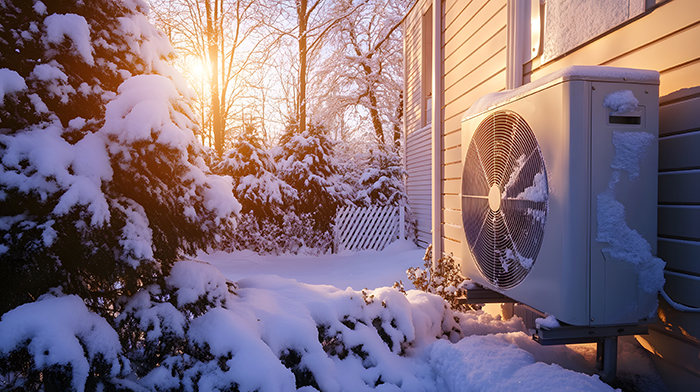
It’s important not to assume that all heat pumps stop working at the same temperature. Models designed for cold climates provide a significant portion of the heating, even in extreme cold. Below their efficiency threshold, a supplemental heating system will need to take over; for example, through a dual-energy system.
Forced-air central heating
A furnace—or hot-air generator—heats the air, which a fan distributes through a network of ducts. It runs on electricity or fuel, depending on the model, and can be paired with a central heat pump. This system, controlled by a smart thermostat, is best suited for homes that already have ductwork and for new construction that is designed with it in mind.
Advantages of a central heating system:
- Heats multiple rooms with a single unit
- Even heat distribution
- Air conditioning and air filtration options available
- Compatible with a smart thermostat
- Excellent energy efficiency
Disadvantages of a central heating system:
- Takes up a lot of space due to the furnace and ductwork
- Involves high installation costs if ductwork is not already in place
- Generates noise from the fan
- Requires regular filter maintenance
Forced-air central heating is suitable for homes already equipped with a duct system or for new construction. Operating costs and efficiency depend on the equipment and the duct system, as the presence of vents does not guarantee the same temperature throughout the house.
Wood and pellet stoves
Wood-burning stoves and pellet stoves generate heat by burning biomass. The former uses logs, while the latter burns small cylinders of compressed wood. They are often used as supplemental heat sources in rural homes and cottages, but some models can provide a significant portion of a home’s heating, depending on their output and the layout of the space.
Advantages of wood and pellet stoves:
- Pleasant radiant heat
- Renewable energy when the wood supply comes from the local area
- A valuable resource during power outages
- Automatic pellet feeding
Disadvantages of wood and pellet stoves:
- Require handling and storage of firewood or wood pellets
- Require regular cleaning
- Produce particulate emissions and other pollutants associated with combustion
- Require professional installation due to the risk of fire
Wood is a renewable resource, but burning it has an environmental impact. To minimize emissions, use a certified appliance, follow the manufacturer’s instructions, and choose an appropriate fuel. Before purchasing, check installation requirements, local regulations, and your insurance policy terms. Since some models require electricity for their mechanisms and fans, also verify how they operate during a power outage.
|
|
|||
|
Type of heating |
Short-term cost (installation) |
Long-term cost (energy consumption) |
Environmental impact |
|
Electric baseboard heaters |
$ |
$$$ |
🌿 |
|
Electric convection heaters |
$ |
$$$ |
🌿 |
|
Heated floors and radiant heating systems |
$$ |
$$ |
🌿🌿 |
|
Central and wall-mounted heat pumps |
$$$ |
$ |
🌿 |
|
Forced-air central heating |
$$$ |
$ |
🌿🌿 |
|
Wood or pellet stoves |
$$ |
$$ |
🌿🌿🌿 |
*In terms of environmental impact, the higher the number of leaves, the greater the estimated impact. These symbols are general guidelines, since costs vary depending on the model, the size of the home, the scope of work, energy rates, and usage habits.
When should you use a supplemental heater?
A supplemental heater complements the main heating system. It’s useful for warming a room that isn’t well heated, adding comfort to a specific area, or stepping in when the main system isn’t enough. It isn’t necessary in every home. A properly sized system should normally meet the home’s needs.
Several types of appliances can serve as supplemental heaters:
- Electric fireplace: adds a cozy atmosphere but serves primarily as a decorative element.
- Gas or propane fireplace: provides localized heat, depending on its output and installation.
- Wood- or pellet-burning stove: helps heat a large part of the house, depending on its capacity and how well the heat circulates.
- Portable electric heater: temporarily warms a room, such as a colder bedroom or office.
Before adding a heating appliance, it’s important to understand why certain areas of the house get colder. Poor heat distribution, air leaks, insufficient insulation, or an improperly sized heating system may be the cause. A space heater can provide temporary relief, but it does not solve the underlying problem.
Which energy source should you choose?
Not all heating systems use the same energy source.
Electricity
In Quebec, electricity is the most common energy source for residential heating, mainly because it is a renewable energy source with a lower environmental impact.
Wood and pellets
These are attractive options when the supply is sourced locally. However, they emit fine particulate matter and other pollutants, though emissions are lower when using a certified unit and following the manufacturer’s instructions.
Fossil fuels: heating oil, natural gas, and propane
In Quebec, residential heating with oil-fired heating systems is restricted due to pollution and the risk of leaks associated with its storage:
- Since 2021, the installation of oil-fired appliances has been prohibited in new construction.
- Since 2023, it is no longer possible to replace an oil-fired appliance with a natural gas or propane appliance in certain buildings. The buildings affected are those with a maximum floor area of 600 m² and three stories or fewer. In addition, it is prohibited to repair a heating system that is more than 20 years old or a water heater that is more than 10 years old.
Exceptions exist for buildings not connected to the electrical grid or powered by an off-grid system, such as those in the Îles de la Madeleine.
Renewable energy: solar panels and geothermal energy
Photovoltaic solar panels convert sunlight into electricity to power an electric heating system or a heat pump. Thermal panels, on the other hand, capture solar energy to heat a fluid, such as water.
Geothermal energy harnesses the heat stored in the ground. A geothermal heat pump transfers this heat to the home in the winter and reverses the process in the summer to provide cooling. Since the ground’s temperature fluctuates less than the outside air, efficiency remains high throughout the year.
|
Tips and tricks
Before choosing an energy source, check the options available in your area and their prices. Ask for estimates that include installation, projected consumption, and maintenance, rather than relying solely on the price of energy or the initial investment. |
Safety, maintenance, and insurance: what you need to know
Before adding or replacing a heating appliance—especially those that burn wood, natural gas, or propane—notify your insurer. These appliances pose a fire risk that may affect your home insurance. Your insurance company will tell you which changes need to be reported on your policy.
For renovation work, hire a licensed contractor. Verify their license in the Régie du bâtiment du Québec (RBQ) registry and find out what permits are required for the renovation work.
In addition, gas-fired heating appliances sold in Quebec must bear the seal of an organization recognized by the RBQ to ensure safe operation.
Finally, regular maintenance prevents breakdowns and the risk of poisoning. Follow the manufacturer’s instructions, have combustion appliances inspected by a professional every year, and have the chimney of a wood stove or fireplace swept according to recommendations. Install smoke alarms and, if combustion appliances are in use, carbon monoxide detectors in the recommended locations.
What grants are available?
Replacing a heating system or improving a building’s envelope may qualify you for financial assistance. In Quebec, several renovation grants fund more energy-efficient heating solutions as well as insulation and weatherization work. These include Hydro-Québec’s LogisVert, the Quebec government’s Rénoclimat, and various Énergir programs.
Homeowners who install an electric thermal storage heating system combined with a central heat pump may also receive up to $22,000 from Hydro-Québec, subject to eligibility requirements.
Since programs, amounts, and eligibility criteria are subject to change, be sure to check the current requirements before beginning your project.
Choosing a heating system that’s right for the long term
Choosing a heating system for your home isn’t just about comparing units and their prices: the building’s energy needs, insulation, heat distribution, and energy source also influence the results.
A high-efficiency heat pump or a well-designed central heating system won’t deliver the expected savings in a poorly insulated home. Conversely, improving the building envelope reduces heating needs and sometimes allows for the installation of a less powerful unit.
Before investing, assess your home’s energy efficiency, the improvements that could enhance it, and the subsidies available. A well-planned choice will help you balance your budget, comfort, and long-term reliability.
Frequently asked questions
1. Which heating system uses the least energy?
A heat pump is generally the most energy-efficient electric heating system. Unlike baseboard heaters and convection heaters, which convert electricity into heat, a heat pump transfers heat from outside to inside the home.
2. Can a heat pump heat an entire house?
Yes, a heat pump can heat an entire house if its capacity and distribution system are suited to the building. In a multi-story home, a central heat pump with ductwork is more appropriate than a wall-mounted unit.
3. Can two heating systems be combined?
Yes, a dual-energy system combines two heating sources that operate alternately. For example, a heat pump can be paired with a natural gas furnace that takes over when needed.
4. What is the difference between a boiler and a furnace?
A boiler heats water that circulates through pipes to radiators, wall-mounted heaters, or a radiant floor system. A furnace heats the air and distributes it through ducts. The difference lies in how the heat is distributed.

| The information provided in this article is for informational purposes only and does not constitute financial, legal, professional or other advice or opinions. As such, we make no warranties, express or implied, as to the accuracy, reliability, integrity or exhaustiveness of this information, which you use at your own risk. In no event shall Centris be held liable for actions made on the basis of the information contained in this article or for any damage or loss, direct or indirect, that may result from, or in connection with, the use thereof. We recommended consulting with industry professionals for personalized advice before making any decisions. |
See also:
The complete home renovation guide: tips, steps and budget
How to choose a supplementary heating system
10 simple tips to save on your heating bill