 The Largest Number of Homes for Sale
What kinds of renovation work require a permit in Quebec?
Renovating a property is often a good investment, but many homeowners neglect the building permit application stage, mistakenly believing that it is not mandatory or that the contractor carrying out the work will take care of it. However, this municipal authorization is linked to the building and not to the person carrying out the work. You are responsible for obtaining a permit even if you hire a specialist.
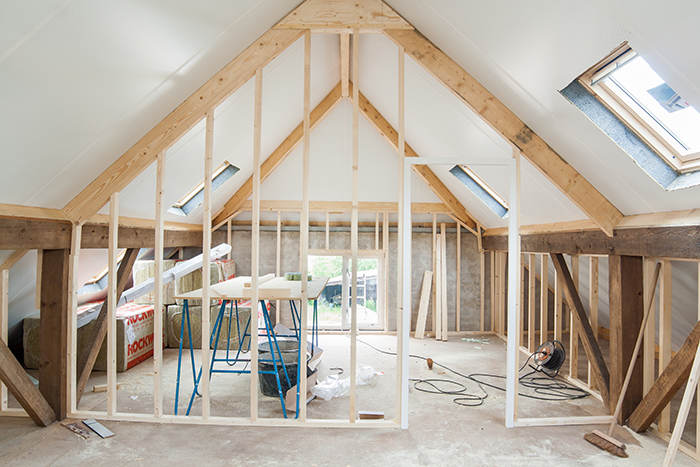
In addition, the rules vary depending on the municipality and the type of dwelling: single-family, condominium, cottage or rental residence. Renovating without a permit can result in fines, compromise your insurance or complicate the sale of your property.
Read on to find out the difference between the building permit, the certificate of authorization, and the declaration of work; when to apply for a renovation permit; as well as the expected procedures, costs, and timelines.
Why do some renovations require a permit?
A permit ensures that your residential renovation work meets the safety standards of the National Building Code . It also ensures occupant safety and compliance with municipal zoning, and maintains property values.
The information collected is shared with various organizations, such as the Régie du bâtiment du Québec (RBQ), the Commission de la construction du Québec (CCQ) and Revenu Québec . This allows the government to monitor ongoing renovation projects, while promoting tax fairness and consumer protection.
What is the difference between a building permit, a certificate of authorization, and a declaration of work?
Before starting residential renovations, it is important to determine what type of authorization is required. Municipalities generally use three types of approval, depending on the nature of a project.
- The building permit : this applies to major work that modifies the structure or value of a house, such as a new build, an extension, a major transformation or the addition of a building. The project must comply with existing municipal by-laws, including those related to subdivision, zoning, and construction.
- The certificate of authorization : this applies to more targeted projects, often involving land development or external installations. For example, a certificate of authorization is required for a change of use, excavation work, building a shed, installing a swimming pool, or removing a tree.
- The declaration of work : some cities use it to regulate minor projects, such as replacing doors and windows or installing identical exterior cladding, without going through the entire permit application process. This process is usually simple, quick and free of charge.
What is the risk of renovating without a permit?
Renovating without permission can have various consequences, as the building permit serves as proof that your renovations meet the standards in force. Without this document, you risk a fine for renovating without a permit, which can range from $350 to $4,000 . The city may also require repairs or refurbishment of the building to ensure its safety and that of the neighbouring properties, in the event of irregularities.
Not having a permit can also have an impact on your home insurance. In the event of a claim related to undeclared or non-compliant work, your insurer may refuse to cover the damage.
In the long term, an incomplete record of work can complicate the resale of your property, slowing down the pre-purchase inspection and notarial verifications. Correcting the situation after the fact is not always easy; additional costs may apply and, in some cases, legal remedies may be required.
 |
Tips and tricks
Before renovating, take the time to consult your municipality’s citizen portal. Several cities offer simple tools to guide you to the appropriate procedures and forms for your project. |
Residential renovations that require a building permit
Each municipality has its own by-laws, but most require authorization for any self-build of a house or major renovation project that affects the structure, use, or safety of a building.
In some cases, the requirement to obtain a permit may also depend on the value of the renovations. In Sherbrooke, for example, work can be carried out without a permit if the cost is less than $25,000—an exception that does not apply everywhere in Quebec.
Extension or alteration of a house’s structure
Any project that modifies a building’s footprint, structural integrity, or the use of a room requires a building permit. This includes:
- Adding an extension
- Building a storey
- Modifying load-bearing walls
- Transforming an interior staircase
- Building a garage attached to the house
- Adding a mezzanine or bedroom
- Installing a chimney or indoor fireplace
To properly prepare for this type of project, see our articles Planning your home addition: types and key stages and 8 tips for a successful house extension .
Exterior alteration to a property
Some exterior work requires a permit, even if it does not alter the building’s structure. A permit may be required if you wish to:
- Replace your roof with a new type of roofing
- Change the dimensions of doors and windows
- Build a porch or a patio
- Extend an existing balcony
- Replace a staircase or ramps
- Install a swimming pool or hot tub with a capacity greater than 2,000 litres
- Build a shed
Modify plumbing or electrical systems
Plumbing and electrical work must generally be approved, even if the work seems minor. For example, rebuilding part of a house’s plumbing system or moving an existing fixture—a shower, bath, toilet, or tap—requires permission to ensure that this work meets Building Code standards.
Adding a dwelling or a room for rent
Do you want to convert a basement to a dwelling or a duplex to a single-family home? Changes in use are subject to strict regulation. Thus, the addition of a self-contained housing unit or the reconfiguration of a space requires a permit.
|
Tips and tricks
Do not rely solely on the value of the work to determine if a permit is required, as even a minor renovation may require a certificate of authorization. If in doubt, contact your municipality’s urban planning department. |
Renovations that generally do not require permits
Most aesthetic or routine maintenance work can be carried out without a permit, since they are not considered construction work within the meaning of the Building Act. That said, regulations still depend on the municipality. It pays to do a quick check on your city’s website before starting any work.
Minor work
If your project is primarily about refurbishing your home, you can probably renovate without a permit. Renovating a kitchen or bathroom, for example, is often exempt as long as it does not interfere with load-bearing walls or plumbing configuration. The same goes for changing your kitchen cabinets or bathroom vanity, or modernizing surfaces .
Other examples of interior renovations that generally do not require a permit:
- Painting and interior decoration
- Change of flooring
- Tap or light fixture replacement
- Small plastering and joinery repairs
- Interior door replacement
- Landscaping, including fences and hedges
- Heat pump or air conditioner installation
Exterior work
The golden rule is often to ensure the work involves an “identical” replacement. As long as exterior work does not change the appearance or structure of the building, authorization is generally not required.
Many
homeowners ask, “Do I need a permit to replace my windows?” Not if you install
models of the same dimensions in the existing openings. The same applies to a
roof redone with an identical material, without any alteration to the
structure.
|
Tips and tricks
Just because the city does not require a permit does not mean that the contractor you hire does not need an RBQ licence . Did you know that if a friend or family member helps you with your work and receives a benefit or gain (for example, you promise them your old cabinets for resale), they can be considered a contractor and must be licensed? Visit the government’s website before you get started! |
How do I apply for a permit?
Applying for permit is all about good preparation. Although each city has its own tools—many of them now have online portals—the process is usually pretty similar. In all cases, you will be required to submit a detailed file describing your project. Be careful, as an incomplete application may result in delays or rejection.
Documents required for a permit application
For your application to be analyzed, it must demonstrate that the project complies with the applicable regulations. The most commonly required documents are:
- Certificate of location: used to check distances to property boundaries and easements.
- Plans and specifications: the construction plans, drawings, and description of the materials used are required.
- Photographs of the current building: often required for various renovation projects, such as changing the exterior cladding or installing new doors and windows of different sizes.
- Contractor contract: some municipalities require a copy of the contract and the RBQ licence number.
Key steps in applying for a permit
The typical building permit application process is as follows:
- Validation of the project with the municipality: an initial consultation with the urban planning department confirms the feasibility of the project and avoids costly adjustments.
- Application submission and payment of fees: the file is submitted with the required documents. Processing of the application only begins when the municipality considers it to be complete.
- Compliance analysis: an inspector or urban planner assesses your project to ensure it complies with municipal by-laws and safety standards.
- Display of the permit: once obtained, the permit must be displayed on the site. This step formalizes the start of work and facilitates inspections.
How much does a building permit cost?
In Quebec, the price of a building permit is not fixed—it varies depending on the municipality, the nature of the project and the value of the work. For a residential renovation, the base cost generally starts between $75 and $275, often with an additional charge proportional to the value of the project. If it is a new building, the pricing is often significantly higher and frequently exceeds $700.
In several localities, a building permit application involves non-refundable file opening fees. These are usually deducted from the total cost of the permit, if approved. For an accurate estimate, consult your urban planning department.
|
|
||
|
City |
Base cost |
Additional fee per $1,000 (value of work) |
|
$254 |
$5.00 |
|
|
$92 |
$2.50 |
|
|
$167.40 |
$9.80 |
|
|
$275 |
$50.00 |
|
|
$150 |
N. D. |
|
|
$75 |
$1.50 |
|
|
$150 |
N. D. |
|
How long on average does it take to obtain a permit?
The time to obtain a building permit in Quebec varies between cities and depends on the nature of the work. Generally, you should allow between 30 and 60 days to receive an authorization. In the case of more complex projects, it could take as long as six months.
Several factors can influence the processing time. First, the time of year plays an important role. Since spring and summer are busy periods, applying in winter can sometimes speed up the process.
The absence of a document, such as an architect’s plan or a certificate of location, can also delay the process by several weeks. Finally, some projects require additional steps, such as a minor exemption or approval from the Urban Planning Advisory Committee (CCU).
Building permits: the must-knows before renovating in Quebec
In short, the building permit and certificate of authorization should not be seen as mere administrative formalities, but rather as tools that regulate your construction projects and protect your investment.
Before undertaking any renovations, it is best to check your municipality’s requirements, which can help you avoid significant financial consequences and issues when reselling your property.
Although some interior renovations offer more freedom, each project deserves careful consideration. By following the rules in force from the start and applying for a building permit when necessary, you can ensure your residential renovation is safe and compliant.
Frequently asked questions
1. Do I need a permit to carry out maintenance work?
As a general rule, maintenance work and minor repairs (painting, flooring, light fixture replacement, etc.) do not require a building permit, as they aim to maintain the original condition of the building without altering its structure or use.
2. Is the process for obtaining a permit the same for a heritage house?
Heritage buildings are protected due to their cultural, historical, or archaeological value. For projects involving such buildings, the construction or renovation authorization is the responsibility of the Ministère de la Culture et des Communications .
3. Are there any subsidies for renovations?
Yes, there are several programs and subsidies available to reduce your costs, especially for energy efficiency projects. In Quebec, the Rénoclimat program offers grants for insulation and airtightness, while Hydro-Québec’s LogisVert Program provides rebates for the installation of heat pumps. Some municipalities also offer tax credits for residential renovation.

| The information provided in this article is for informational purposes only and does not constitute financial, legal, professional or other advice or opinions. As such, we make no warranties, express or implied, as to the accuracy, reliability, integrity or exhaustiveness of this information, which you use at your own risk. In no event shall Centris be held liable for actions made on the basis of the information contained in this article or for any damage or loss, direct or indirect, that may result from, or in connection with, the use thereof. We recommended consulting with industry professionals for personalized advice before making any decisions. |
See also: